The keys are to appeal to the reader's Utility or Interest.
Showing posts with label Daniel H Pink. Show all posts
Showing posts with label Daniel H Pink. Show all posts
Wednesday, 12 June 2013
How to get your message across in Emails. Daniel H. Pink explains the "Email Pitch"
Further to my review of Daniel Pink's To Sell is Human, here's the second in the series of excellent videos on pitching; this one outlines "The Email Pitch" and how to grab people's attention.


Wednesday, 22 May 2013
Want to get your message across? Daniel H. Pink explains when to ask questions and when to make statements.
Further to my review of Daniel Pink's To Sell is Human, here's an excellent video which outlines "The Question Pitch" and when it is best to ask questions to get your message across.
Monday, 22 April 2013
Daniel H. Pink: To Sell is Human - Book Review
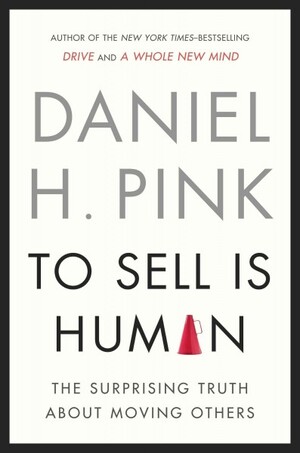
Daniel H Pink's To Sell is Human traces how the world of marketing has changed with a consequence that the stereotypical image of a secondhand car salesman is a long way from best practice today. There has been a fundamental shift in power: in the past Salesman had knowledge of the product and of pricing creating a power imbalance between salesman and customer (hence caveat emptor); however, with the rise of the Internet and social media, consumers now have knowledge and the power to bite back if they are bitten (hence caveat venditor).
Central to Pink's thesis is the argument that to a greater or lesser extent we all employ marketing techniques as part of our daily work (selling ideas to others, exhorting others to do things that we want them to do, etc.) hence his assertion that we are all to some extent in marketing.
Pitching
This is quite a practical book and one of the strongest examples of this is the section on "pitching" to others. Here Pink outlines six different ways to pitch. These would make an excellent brainstorming session for school marketing departments - How would sum up your school using the following six techniques?
- The one-word pitch: e.g. Mastercard's "Priceless"
- The question pitch: e.g. Ronald Regan's "Are you better off now than you were four years ago?" in the 1976 US Election campaign.
- The rhyming pitch: e.g. "If it doesn't fit, you must acquit" from O.J. Simpson's lawyer at his trial.
- The subject line pitch: A phrase that can fit into an email subject line (tip: utility and curiosity are the key to success here)
- The Twitter pitch: Using 140 or fewer characters.
- The Pixar Pitch: Employing the winning formula used by Pixar movies (Once upon a time . . . . Every day, . . . . One day, . . . . Because of that . . . Because of that . . . . Until finally, . . . . )
Pink provides an excellent summary of his book in the form of what he terms a "Pixar Pitch":
"Once upon a time only some people were in sales. Every day, they sold stuff, we did stuff and everyone was happy. One day everything changed: All of us ended up in sales - and sales changed from a world of caveat emptor to caveat venditor. Because of that, we had to learn the new ABCs - attunement, buoyancy and clarity. Because of that, we had to learn some new skills - to pitch, to improvise, and to serve. Until finally, we realised that selling isn't some grim accommodation to a brutal marketplace culture. It's part of who we are - and therefore something we can do better by being more human." p.172-3
Pink ends his book on a rather moral note arguing that selling needs to provide a service: he asks two questions, which all would do well to heed.
- If the person you're selling to agrees to buy, will his or her life improve?
- When your interaction is over, will the world be a better place than when you began?
Overview
This sits firmly in the accessible business/psychology genre much loved by our colleagues across the pond. Pink writes well and this is an easy read with lots of good practical take-aways in the form of exercises at the end of the key chapters.
Sunday, 13 May 2012
Drive by Daniel H Pink - Book Review

Daniel H Pink's Drive is a study of what motivates people and its conclusions are as relevant for individuals as they are for organisations.
The essence of Pink's argument is that the secret to achieving high performance in the work place is to shift from "Extrinsic" reward-based motivators, such as bonuses; to "Intrinsic" motivators, such as having greater autonomy, having the opportunity to master what we do, and having a sense of a (higher) purpose.
The book is divided into three sections.
The essence of Pink's argument is that the secret to achieving high performance in the work place is to shift from "Extrinsic" reward-based motivators, such as bonuses; to "Intrinsic" motivators, such as having greater autonomy, having the opportunity to master what we do, and having a sense of a (higher) purpose.
The book is divided into three sections.
- The first engages with the body of research on what motivation, which indicates that traditional motivational techniques of carrots and sticks ("Motivation 2.0") are flawed. Indeed, he argues that (extrinsic - "Type X") bonus cultures when applied in the wrong context can have the opposite to the desired effect, causing a short-term approach that can encourage unethical behaviour and addiction to the next reward. Instead, the key is to motivation are intrinsic ("Type I") rewards:
- The second expands on the three pillars of an intrinsic motivational culture ("Motivation 3.0): Autonomy (over Task, over Time, over Technique, over Team), Mastery (is a Mindset, is Pain, is an Asymptote) and Purpose (words - policies - goals).
- The third section provides a handy summary in the form of a "Type I Toolkit" of how these principles for individuals, organisations, parents and educators.
Drive is an excellent book and I thoroughly recommend it to all who aspire to lead teams or organisations.
The ideas that underpin Drive have important implications for education. I will discuss these in subsequent blogposts in the coming weeks.
Subscribe to:
Posts (Atom)


