There is little doubting that smart phones were the "game-changer" when it comes to email - once your work emails were on the phone there was no getting away from them . . . or indeed from work. For those of us who are technically minded achieving a work-life balance took on a new dimension.
Work emails coming through 'out of hours' have an ability to pull you instantly away from your family, friends and relaxation, back to the office. The arrival of a work email in your inbox can ruin an evening or weekend. They put the ball back in your court - they demand action, whether that be thought, a phone call, or (just!) the time to reply. One of the biggest problems with emails is that they are like a virus, they spawn more emails - they demand replies and very soon everyone is sending emails to each other. The consequence is that the whole tempo of the organisation speeds up to the point where it is out of control and people simply cannot cope any more.
The 1900 to 0700 Curfew
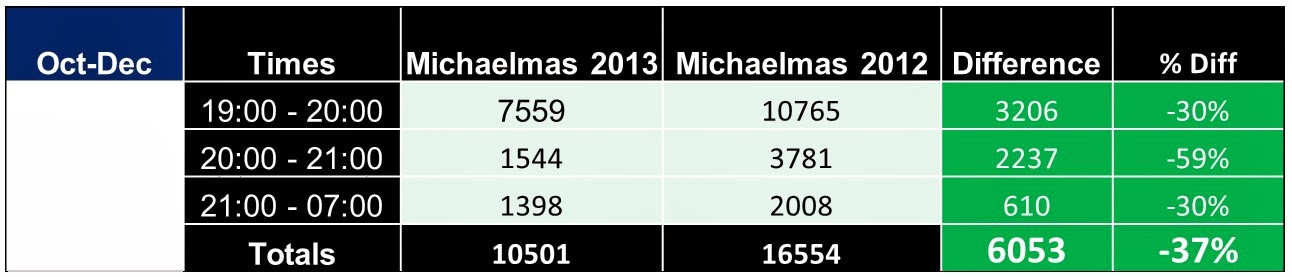
Berkhamsted School is like most other organisations: emails came through morning, noon and night. We took the view in September 2013, that we would limit our internal email traffic to weekdays between 0700 and 1900 only. This principle was extended to parents in March 2015 - parents were informed that any emails sent outside 'office hours' would be dealt with the next working day. There is nothing to stop colleagues from drafting replies outside these times, so long as they use the 'delayed delivery' function in Outlook (Options - Delay Delivery).
The key principle here is that we all to manage our own time as we see fit, but that it is wrong to put the ball into a colleague's court by sending an email outside the working day.
The Results
Two years on, the volume of email traffic has reduced and emails are generally more considered - there are fewer late night alcohol induced rants. Most importantly there has been a shift in mindset: there has been a cultural shift in the moral 'high ground' colleagues no longer feel guilty not replying to an email - colleagues now feel guilty for sending them. Colleagues now feel that it is acceptable to ignore evening and weekend emails. When colleagues break the curfew, it is quite common for them to preface their emails with "I'm sorry to break the curfew, but . . . ", which can be quite endearing when the 'but' is an enthusiastic member of the coaching staff sharing the weekend success of a school sports team.
The result is that the school is calmer. We are working smarter not longer. The whole exercise has meant that staff feel valued.
Achieving a term-time work-life balance in our school community remains a challenge, but we have taken one small step in the right direction, and that is appreciated by us all.
Issues yet to be resolved - School Vacations
There are still a number of issues that need to be resolved as to how the school email protocol operates during the School holidays. We have to face the fact that teachers and school leaders get more annual leave than people who have made different career choices. We also have to acknowledge that a proportion of the time when schools are on vacation are times when teachers and school leaders work - to some extent it is "non-contact time" - be that lesson preparation or performing management tasks. In the twenty-first century it is unreasonable for employees to be totally uncontactable for the six (or in the case of many independent schools - eight) weeks of the summer vacation - particularly for middle and senior leaders.. Here the general principles of the term-time protocol apply: emails are sent during the weekdays 0900 and 1700 and allowance is given when replies aren't the next day.
Issues yet to be resolved - School Vacations
There are still a number of issues that need to be resolved as to how the school email protocol operates during the School holidays. We have to face the fact that teachers and school leaders get more annual leave than people who have made different career choices. We also have to acknowledge that a proportion of the time when schools are on vacation are times when teachers and school leaders work - to some extent it is "non-contact time" - be that lesson preparation or performing management tasks. In the twenty-first century it is unreasonable for employees to be totally uncontactable for the six (or in the case of many independent schools - eight) weeks of the summer vacation - particularly for middle and senior leaders.. Here the general principles of the term-time protocol apply: emails are sent during the weekdays 0900 and 1700 and allowance is given when replies aren't the next day.
Teaching is a profession where clock-watching is not part of the professional mindset.A key area of debate at Berkhamsted is the extent to which teachers should be available to examination year pupils during the key revision periods of Easter and the Summer half-term. There are arguments either way - this is a period when motivated pupils who are working their way through past papers can benefit enormously from teacher feedback, but it is also the time of year when teachers are under the greatest pressure. A balance needs to be struck; and in most cases, teachers are giving of their time and expertise when the pupils have made a consistent effort throughout the year and have managed their time well.
Key Lessons learned
- A change in email culture needs to be driven from the top - school leaders need to be role models and create a culture where teachers 'have permission' to ignore 'out of hours' email traffic. It is well known that employees follow the lead of senior figures in organisations in order to get on: as School Principal, I made a point of activating my 'out of office' notification at weekends.
- Breaches of the curfew need to be followed up with an informal conversation - particularly when the perpetrators are in the SLT.
- Staff need training in how to use the 'Delayed Delivery' feature in Outlook.
Note on Independent and Maintained Sector Schools
This week, the Secretary of State for Education, Nicky Morgan, called for schools to ban 'out of hours' emails to ease the workload on teachers in the maintained sector ('Morgan: Ban emails after 5pm to help teachers cope with workload' Daily Telegraph 26/07/2015). I'm sure that this is a step in the right direction. There are different pressures in the two sectors: independent schools increasingly demanding fee-paying parents; and there is much more 'red tape' and bureaucracy in the maintained sector. Both create email and pressure. Schools need space to do their jobs and limiting email traffic is one way to help teachers do this.
Berkhamsted School was award the Investors in People Gold Award in July 2015.
This week, the Secretary of State for Education, Nicky Morgan, called for schools to ban 'out of hours' emails to ease the workload on teachers in the maintained sector ('Morgan: Ban emails after 5pm to help teachers cope with workload' Daily Telegraph 26/07/2015). I'm sure that this is a step in the right direction. There are different pressures in the two sectors: independent schools increasingly demanding fee-paying parents; and there is much more 'red tape' and bureaucracy in the maintained sector. Both create email and pressure. Schools need space to do their jobs and limiting email traffic is one way to help teachers do this.
Berkhamsted School was award the Investors in People Gold Award in July 2015.