Sir
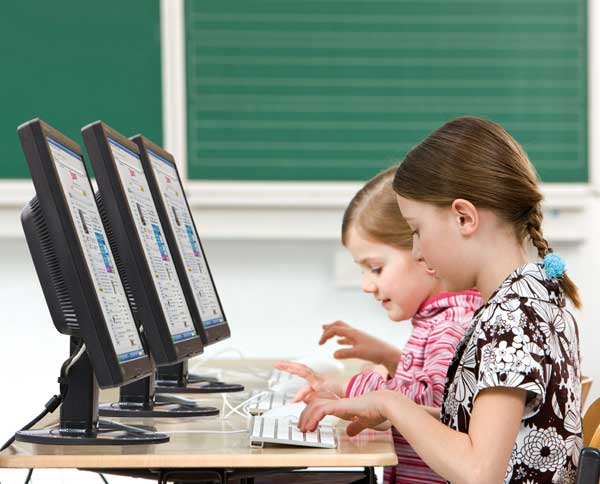
Schools can only do so much in the battle to limit the amount of time that young people spend on mobile phones (‘Ban mobile phone use in schools’ 2nd February 2019). It is parents, not schools, who are responsible for purchasing mobile phones, and, whilst one can accept that children may need to carry a mobile phone as part of their personal safety, there is no need for this to be a smartphone which facilitates full, unfiltered web and social media access. In contrast, where schools allow or supply tablet devices or laptops for educational purposes, responsible institutions usually provide full web-filtering and a device management system that allows the teacher to monitor and take control of the pupil’s tablet.
Yours faithfully,
Mark S. Steed
Director
JESS, Dubai
Published 5th February
Showing posts with label e-safety. Show all posts
Tuesday, 5 February 2019
Friday, 31 October 2014
e-Safety for Teachers - Why teachers need to protect themselves on Social Media and some tips on how to do it.
| Beware: Parents Troll Teachers |
Protecting your Digital Tattoo
Teachers would be well advised to take the time to protect their online presence. Most obviously this entails a good understanding of the privacy settings on individual social media sites. However, teachers should bear in mind that, whilst, it is possible to prevent members of the public (including parents and pupils) from having access to personal pictures and posts, it is perhaps safest to assume that, in practice, everything that is posted online is in the public domain. Once it is out there, rather like a tattoo, it is very difficult to get it removed. The rule of thumb is 'don't post anything online that you wouldn't want to see in the Daily Mail.'
However, we are not totally responsible for our digital tattoo for others can post pictures and write things about us online. This is more difficult to monitor and control. Two useful steps are to Google yourself and to see what is out there about you; and to set up a Google Alerts which will inform you when your name appears on a website.
One of the greatest areas of concern for teachers comes in the form of the RateMyTeacher website. The site purports to provide "user generated feedback on teachers' and professors' teaching methods and their respective courses." In practice it provides an unaccountable platform for malicious comments, unbalanced judgements and the cyber-bullying of teachers. Because comments are posted anonymously and the site is now hosted in the US, there is in practice no legal redress for any slanderous accusations posted on the site (because US law protects the site from prosecution, and it is almost impossible to trace any individual who made the original post). The consequence is that teachers are vulnerable to potentially career damaging false accusations.
Taking steps to have unwanted posts on the Internet is quite difficult - it is a combination of 'blocking' people and 'reporting abuse' to websites - but this doesn't always work. The most effective way to have a positive Digital Tattoo is be active on the web by blogging, tweeting and being referenced in good articles.
Keeping Professional Distance. It is universally accepted within schools that there needs to be a 'professional distance' between teachers and pupils. This is necessary in the classroom, but it is all the more important in teachers' private lives. Part of this 'distance' is that teachers don't socialise with pupils: a young teacher who goes clubbing with the sixth form crosses a line which, at best, lays himself open not only to the charge of unprofessionalism, and, at worst, could lead to allegations of serious misconduct. In the same vein, teachers are well advised to ensure that all lines of communication with pupils are through official channels. It is generally accepted that teachers should not be emailing pupils from their personal accounts, or texting or phoning pupils from their personal mobile phones. Indeed, almost all schools provide an official school email for this purpose and some schools, recognising the necessity and ubiquity of mobile communication, provide teachers in pastoral roles with mobile phones which are paid for by the school on the understanding the communication may be monitored.
Teachers, Pupils and Social Media.
Facebook 'friends' range from close family to passing acquaintances: it is a melting-pot of all whom we know and meet. One of the problematic features of Facebook is that it forces us to interact with all our 'friends' in the same way, which is not how we interact in the real world. The language we use when speaking to our oldest friends is often markedly different to the language we use in the workplace. How we talk to our mates when out on a Saturday night is far from the language and tone that we employ when teaching Year 12.
So should teachers be 'friends' with pupils on Facebook? Some may argue that the privacy settings enable teachers to separate professional and personal relationships on Facebook. To some extent this is true - it is possible for teachers to prevent pupils from having access to personal posts and photographs. However, my greatest concern about social media is that they open up a private channel of communication between teachers and pupils, which can put teachers unwittingly into a situation where they are open to accusations of misconduct. How would a teacher who was a 'friend' with a Year 13 girl defend a claim that s/he had been conducting an online relationship? We can also turn the question around, can there ever be a good reason for teacher to be 'friends' with a pupil on Facebook?
Teachers, Pupils and Social Media.
The traditionally clear distinction between the professional and the personal is blurred by social media.
Facebook 'friends' range from close family to passing acquaintances: it is a melting-pot of all whom we know and meet. One of the problematic features of Facebook is that it forces us to interact with all our 'friends' in the same way, which is not how we interact in the real world. The language we use when speaking to our oldest friends is often markedly different to the language we use in the workplace. How we talk to our mates when out on a Saturday night is far from the language and tone that we employ when teaching Year 12.So should teachers be 'friends' with pupils on Facebook? Some may argue that the privacy settings enable teachers to separate professional and personal relationships on Facebook. To some extent this is true - it is possible for teachers to prevent pupils from having access to personal posts and photographs. However, my greatest concern about social media is that they open up a private channel of communication between teachers and pupils, which can put teachers unwittingly into a situation where they are open to accusations of misconduct. How would a teacher who was a 'friend' with a Year 13 girl defend a claim that s/he had been conducting an online relationship? We can also turn the question around, can there ever be a good reason for teacher to be 'friends' with a pupil on Facebook?
Facebook Friends with parents. The example above illustrates the dangers of being friends with parents on Facebook, but maintaining this distance is not always as easy as it may seem. Separating the personal and the professional is particularly difficult for those who have children in the school in which they work - for they are both teacher and parent at the same time. The prevalence of Form Facebook groups can put colleagues into a difficult position, particularly when the group gets up a head of steam on a particular issue. Teachers are best advised in these circumstances to maintain a discrete silence, lest their unique position be (mis)quoted to give extra weight to the argument.
Twitter. The way in which many people use Twitter confuses the professional and the personal: one minute the teacher is sharing a teaching idea picked up at an excellent INSET, the next s/he is posting pictures of the family reunion. My advice here is simple: if you want to post about professional and personal matters, run two twitter accounts; and if pupils are following you on Twitter, use the 'mute' function (from the settings menu) to disable their ability to tweet on your timeline or to message you directly.
LinkedIn. LinkedIn is a professional networking site - linking up is the social media equivalent of exchanging a business card. As such, LinkedIn is a useful vehicle for connecting with colleagues, parents and former pupils as 'professional distance' is built it. Users have full control of their own profile and it is not possible for others to post pictures or comments on the site that are publicly visible. Teachers would be well advised not to link with current pupils because LinkedIn does have a messaging feature and thus opens up the possibility of a private communication channel.
Conclusion: There is little doubt that many teachers need to take much greater care when navigating the world of social media. Forewarned is forearmed.
Related Posts
Related Posts
Wednesday, 29 October 2014
e-Safety for Teachers - "Don’t leave yourself open to abuse, teachers told"
My interview with Nicola Woolcock of The Times published on Monday 20th October:
Don’t leave yourself open to abuse, teachers told
Teachers should keep their distance from parents as much as pupils on social media sites for fear of being “trolled” in revenge for classroom punishments, a head teacher has advised. Mark Steed, principal of Berkhamsted School and chairman of the information and communications technology (ICT) strategy committee for the Independent Schools Council (ISC), told The Times that parents could “troll” teachers following punishments or oversights involving their children.
“Social media colours what was a very simple relationship,” he said. “There needs to be a very clear separation between pupils and teachers’ private lives. This can be confused by friendship on Facebook, which can lay a teacher open to accusations that are hard to defend, because of private messaging.” Mr Steed said his senior staff had school mobile phones and could use these to text pupils about school matters, but that he had drawn up guidance for teachers on using social media.
He added: “Another concern is of parents trolling teachers, and about members of the profession being vulnerable on websites such as Rate My Teachers, which is a totally unaccountable platform.
We did have a very difficult situation where a parent was upset that a child didn’t make it onto a sports team. “In vengeance, the parent went online and sent me a picture of the teacher at a party from the teacher’s Facebook site. It hadn’t been protected by privacy settings. We have now taken steps against parents doing that.”
Mr Steed recommended that teachers set up two separate Twitter feeds for their personal and professional lives. “Don’t ‘follow’ pupils. This removes a potential private communication channel. You can control who follows and block who replies,” he said. Of Facebook, Mr Steed added: “There is a private communication channel which opens teachers to charges of unprofessionalism. Don’t ‘friend’ current pupils and be very wary of ‘friending’ former pupils.”
Berkhamsted is hosting the ISC’s annual strategy conference this week for heads of ICT at schools.
Don’t leave yourself open to abuse, teachers told
Teachers should keep their distance from parents as much as pupils on social media sites for fear of being “trolled” in revenge for classroom punishments, a head teacher has advised. Mark Steed, principal of Berkhamsted School and chairman of the information and communications technology (ICT) strategy committee for the Independent Schools Council (ISC), told The Times that parents could “troll” teachers following punishments or oversights involving their children.
“Social media colours what was a very simple relationship,” he said. “There needs to be a very clear separation between pupils and teachers’ private lives. This can be confused by friendship on Facebook, which can lay a teacher open to accusations that are hard to defend, because of private messaging.” Mr Steed said his senior staff had school mobile phones and could use these to text pupils about school matters, but that he had drawn up guidance for teachers on using social media.
He added: “Another concern is of parents trolling teachers, and about members of the profession being vulnerable on websites such as Rate My Teachers, which is a totally unaccountable platform.
We did have a very difficult situation where a parent was upset that a child didn’t make it onto a sports team. “In vengeance, the parent went online and sent me a picture of the teacher at a party from the teacher’s Facebook site. It hadn’t been protected by privacy settings. We have now taken steps against parents doing that.”
Mr Steed recommended that teachers set up two separate Twitter feeds for their personal and professional lives. “Don’t ‘follow’ pupils. This removes a potential private communication channel. You can control who follows and block who replies,” he said. Of Facebook, Mr Steed added: “There is a private communication channel which opens teachers to charges of unprofessionalism. Don’t ‘friend’ current pupils and be very wary of ‘friending’ former pupils.”
Berkhamsted is hosting the ISC’s annual strategy conference this week for heads of ICT at schools.
Tuesday, 23 September 2014
e-Safety for Teachers
A presentation on e-Safety for Teachers given to the Berkhamsted School teaching staff on 24/09/2014.
Monday, 17 February 2014
Why Neknominate is so popular with Young People and what Parents and Schools should do about it.
As NekNominate claims its third UK victim (Salesman becomes third British victim of NekNominate craze after downing two PINTS of gin and posting video on the internet Daily Mail 16/02/2014), there is little doubt that the latest Facebook craze is dangerous - but that indeed is its attraction for young people.
The NekNominate phenomenon brings together four drivers of the culture of young people:
- The propensity to explore drinking limits. This is not a new phenomenon: young people have played drinking games since the invention of alcohol.
- The desire to take risks. Research by Professor Sarah-Jane Blakemore of University College, London, demonstrates that risk-taking is a key feature of the adolescent brain. She has found that the limbic system of young people aged 16 to 24 is hypersensitive and rewards risk-taking. 'They are particularly prone to taking risks when they are with their friends.' (See Sarah-Jayne Blakemore's TED Talk: The mysterious workings of the adolescent brain). The fact is that young people are wired to take risks. This goes a long-way to explain the Gap-year bungee-jump phenomenon.
- The need to be loved/ respected by one's peers is a well-documented driver of many aspects of human society. Family, employment, philanthropy in its many forms and, more recently, celebrity have provided these for generations. Today, the Internet provides the ability to achieve "fifteen minutes of fame" and to engage instantly no only with friends and family but with an audience that twenty years ago was only available to TV celebrities and leading politicians.
- The ability to publish information about oneself to the Internet. There is a tendency among many people 'to live out their lives' on Facebook. Social Media provide instant feedback and reaffirmation - friends can comment and 'like'; 'hits' and 'retweets' are counted, all fueling the need to be loved and respected. The problem with this is that young people have little concept that publishing to the Internet is like having a digital tattoo: it is very difficult to get rid of what you have written once it is published.
The combination of these factors mean that young people are competing for each other's attention on a world stage and the threshold for notoriety and 'respect' are consequently higher. As the rewards go up, so do the stakes and the consequence is that the entry level for the respect of one's peers is for NekNominees to risk their own lives.
So what can we do as parents and educators?
Well we can't really stop it or ban it. The phenomenon is out there and young people will always find ways around any parental controls that we put in place.
Here are four antidotes to the NekNominate phenomenon.
- Ensure that young people not only are educated about safe drinking limits, but also that they know what to do if they or one of their friends go too far.
- Channel the risk-taking. Given that young people are wired to take risks, it makes sense to provide young people opportunities to take risks in controlled environments. Outdoor education has a huge part to play in this - rock climbing, skiing, expeditions take young people out of their comfort zones and can fulfil the need to take risks, but within the bounds of overall safety.
- Provide 'real-world' opportunities to demonstrate love and respect for young people. Parents and schools need to celebrate the positive contributions that young people make. Most importantly young people need to feel loved by their parents (and this is often best achieved by setting consistent boundaries for them).
- Ensure that young people not only are Internet-aware, but that they have people to talk to when times get tough. Extended family and a school's counselling service can play a very important role in this.
Labels:
Alcohol,
e-safety,
Internet Safety,
NekNominate,
Parenting,
Risk
Tuesday, 23 July 2013
How technology is changing education in our independent schools - An overview
Introduction
Great claims have been made over the past twenty years about the impact that ICT would have on teaching and learning, most of which only succeeded in disappointing. However, at long last, the combination of reliable ICT networks, affordable equipment, innovative educational software and an increasingly ICT-literate body of teachers means that we are beginning to see ICT making a real difference to the day-to-day education in independent schools. The impact of new technologies is being seen in every area of school life: academic, pastoral, co-curricular and in school administration.
Academic
Martini Learning. Widespread access to new technologies has been one of the most important catalysts of the shift in emphasis from classrooms being about teaching, to them being about learning. Pupils now have access to web-based to learning resources at school, at home and on the move. Learning is no longer confined to the classroom or to the prep room, it happens “anytime, anyplace, anywhere”: we are in the age of “Martini learning”. Most Independent senior schools now have the necessary WIFI infrastructure in place to support mobile learning and this is likely to be greatest area of growth over the coming years.
Online Apps and Collaboration. Some of the most innovative work that is going on in schools at the moment surrounds the use of Online Apps (such as the Google Apps suite and MS Office 365). These technologies allow pupils and teachers to collaborate online by working on the same document. Teachers are taking tasks that traditionally were set as homework (say, read and note chapter 7 of The Lord of the Flies under the following headings . . . ) and developing them into class collaborative piece of work. The result is that pupils gain a range of insights from their peers whilst practising the important life skill of working with others. Anecdotal evidence is that pupils make a greater effort when working collaboratively because of the public aspect of publishing ideas to their friends. Online collaborative working is so popular that many schools are finding that pupils find it their preferred form of independent learning, setting up shared documents to work on homework without any teacher input or encouragement at all.
Social Network CPD. Collaborative new technologies are also transforming the staff room. The rise of social media platforms (such as Twitter, online forums and blogs) has heralded an unprecedented period of collaboration and mutual support. Teachers now are able to share lesson ideas not only within the department but also with colleagues around the country. This has both facilitated the spread of ‘best practice’ and established an important vehicle for INSET.
Pastoral
e-Safety. Independent schools pride themselves in having outstanding levels of pastoral care and devote time and money to providing it. The Internet has brought with it a number of important challenges for all schools and e-Safety now has a central place on any PSHE programme sitting firmly alongside drugs and alcohol as one of the greatest threats to young people. Whilst many of the issues are fundamentally the same ones with which schools have been dealing for years (cyber-bullying is bullying, Internet porn is pornography, cyber-safety is personal safety), there are a number of new challenges. Arguably, the greatest dangers that young people face come, not from what they can download from the Internet, but from what they are able to publish to it. Ultimately, it is impossible to control pupils’ access to the Internet and the only way forward is to educate the young people in our care to use the Internet responsibly.
Communication. One of the greatest pastoral challenges that new technologies have brought for independent schools is that pupils have immediate access to their parents; and that parents, in turn, have immediate access to teachers, houseparents, and senior leaders. Minor issues and incidents, which only ten years ago would have been dealt with in-school and forgotten before the end of the day, are blown out of all proportion, causing unnecessary anguish, management time and paper-trails.
Co-curricular
One of exciting benefits of cheap and ready access to new technologies is that it is relatively easy for pupils to do things today that in the past would have taken hours and an enormous budget. Every pupil now has the opportunity to make a video, their smartphone the camera and their laptop the editing studio; to publish articles and to engage a world-wide audience. There is no doubt that new technologies have given a new status to creativity. In a world where YouTube videos and blogposts can go viral – the opportunity for “15 minutes of fame” is there for all. Independent schools are well placed to harness the creativity in young people in a range of co-curricular clubs and societies of which we (of a previous generation) could only dream.
School Administration
As with all organisations, independent schools have implemented a range of new ICT initiatives to improve school administration. It is generally accepted that ICT will not save schools money (Bursars stopped asking, “when will we see a return on this investment?” years ago) but it has raised the bar. Independent schools undoubtedly hold and analyse more data on pupils than ever before.
Communication with parents has changed beyond belief. On the positive side, almost all independent senior schools have ditched hand-written reports and moved to a database system. No longer do teachers have to queue up in the common room waiting for the ledger containing Form 3A’s reports, but they can log into the school database from the comfort of their home. Many schools are now making the move to publishing reports only online through the ‘Parent Portal’. Whilst letters home lost in school bags are a thing of the past, one of the greatest challenges caused by new technologies that schools face today is the unprecedented level of email traffic that flows between home and school. Most schools (and, indeed, parents) can’t cope.
Many schools have even embraced biometric technologies using them for registration, library withdrawals and even to control door entry about the school site.
Conclusion
Some people talk about ICT in Schools as if it were a project that one day will be complete. That is about as wrong as asking, “When will the London skyline be finished?” Independent schools have an excellent record at harnessing new technologies for education – and we can be confident that that will be the way of the future.
An article written for the Independent Schools Show magazine
Subscribe to:
Posts (Atom)